
Bells, Biases, and Boating in the Rain: A Madrid Travelogue
SPAINMADRIDCATHEDRAL
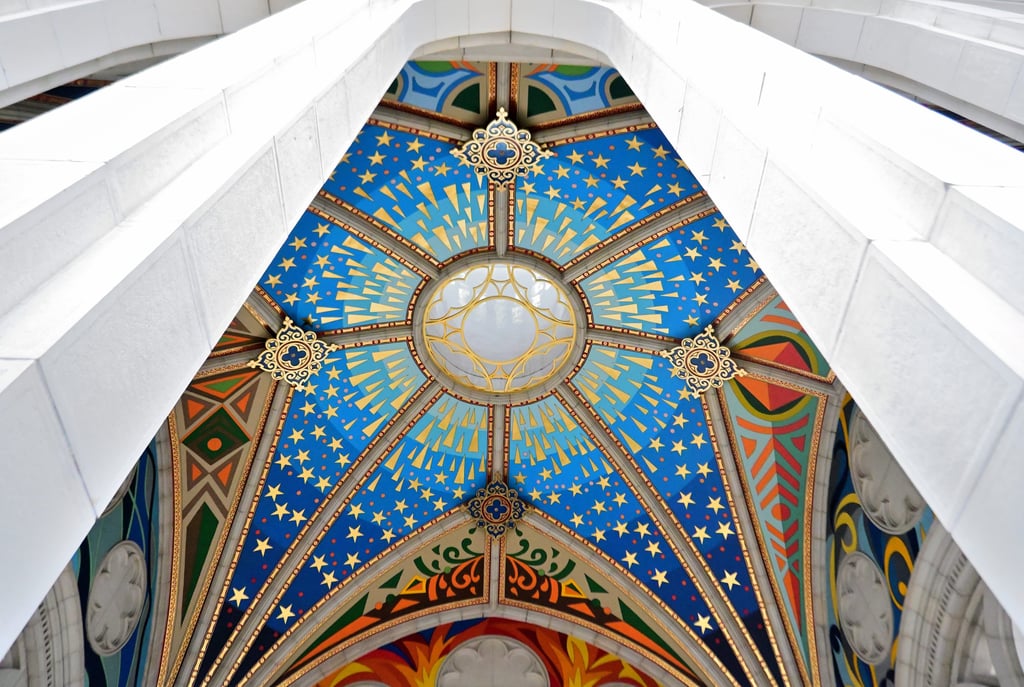
We found ourselves back at the grand Almudena Cathedral in Madrid—a building that seems utterly determined to make you crane your neck at every available opportunity.
Now, I’ll be completely honest: the cathedral's interior museum section is… worthy. It is educational. It is thorough. It is also, possibly, a touch endurance-based. However, once you pass the exhibits, start climbing the steps, and the elevated views begin to open up, the entire experience improves dramatically. Madrid spreads out beneath you in every direction—a sea of terracotta red rooftops, grand sweeping boulevards, and the magnificent Royal Palace sitting proudly right next door. Suddenly, every single step of the arduous stair climb feels entirely justified.
Architecturally, though, I couldn’t help but compare it to the mighty Toledo Cathedral. Toledo’s historic structure feels weightier, grander, and distinctly more… senior.
As it turns out, that makes perfect logical sense because the highest-ranking archbishop in Spain resides there. Yes, I discovered that cathedrals have a strict, internal hierarchy. I had absolutely no idea. Toledo holds the official title of the “Primate” of Spain—and no, to clarify, not the monkey kind.
In fact, I only discovered that "primate" was an ecclesiastical, religious term thanks to an episode of Who Wants to Be a Millionaire?—a television show that has arguably educated me in more obscure trivia than my school years ever managed. The word originates from the Latin meaning “first” or “chief,” which neatly explains both high-ranking archbishops and apes. Language is efficient like that.
Back in Madrid, we spent the vast majority of our time doing what you inevitably do inside grand European churches: looking straight up. The decorated ceilings, intricate frescoes, towering statues, and dramatic arches are all masterfully designed to pull your gaze heavenward.
The featured photograph captures the imposing upper dome and bell tower of Almudena Cathedral. It is magnificent, dramatic, and absolutely bursting with architectural confidence. Though, I must confess a minor technical detail: I never actually managed to see any physical bells.
One of the genuine highlights of the cathedral ticket is the rare ability to walk entirely around the exterior upper gallery, which normally offers breathtaking panoramic views over the Madrid skyline. That is, of course, assuming the winter clouds haven’t descended straight down to eye level to erase the city entirely.
February weather in central Spain can occasionally be less “warm Mediterranean glow” and significantly more “mildly apocalyptic mist.” On one particular afternoon, the ambient visibility dropped to the point where I was fairly certain the cathedral was hovering entirely above a blank sheet of paper.
And yet, in what I can only describe as an absolute masterclass in human stubbornness, on our final day in the city we visited the famous El Retiro Park.
The rain was completely relentless. The iconic boating lake looked as though it was actively auditioning for a high-budget disaster film. And still—despite the downpour—there were people out on the water rowing rental boats with their umbrellas wide open, defiantly circling the lake as if this was perfectly normal holiday behavior.
I have a few urgent questions. Chiefly: exactly how much volume of rain does it take to capsize and sink a plastic rowing boat? And secondly: why on earth are we testing this physics theory voluntarily on a weekend break?
But then again, I am English. Which means two fundamental truths apply to my DNA:
I will complain about the weather at every given opportunity.
I will resolutely continue participating in scheduled outdoor activities regardless of said weather.
As the great Noël Coward famously observed, "Mad dogs and Englishmen go out in the midday sun." He simply neglected to mention that we also gladly venture out in sideways driving rain, dense freezing fog, and anything else vaguely inconvenient to our itineraries. Weather is merely temporary. Englishness is entirely permanent.
And if there is a historic cathedral dome to photograph, we are absolutely climbing it—bells or no bells.
Photography Notes
Location: Almudena Cathedral Dome, Madrid, Spain.
Subject: Neoclassical & Gothic Revival Ecclesiastical Architecture.
Shooting in Heavy Mist and Flat Overcast Skies: Low-visibility winter mist can easily trick a camera’s internal light meter into underexposing an image, turning white fog into a murky, depressing grey. When shooting upward at a grand dome surrounded by thick mist or bright white clouds, manually adjust your
Exposure Compensation dial up by +0.7 or +1.0EV. This forces the camera to ignore the blinding background brightness, ensuring the intricate stone carvings, columns, and architectural details of the dome remain beautifully sharp and properly exposed.