
Graduation Day & Rogue Dial Syndrome: 2 Essential Lessons from a High-Stakes Shoot
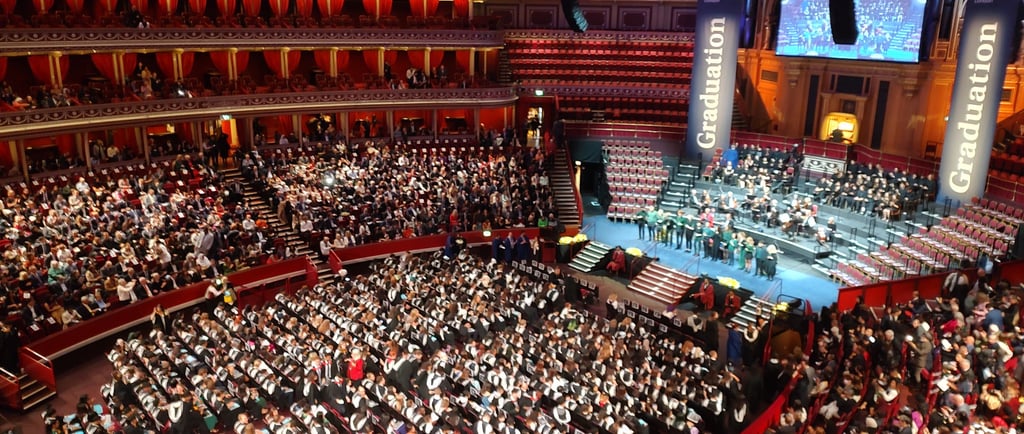
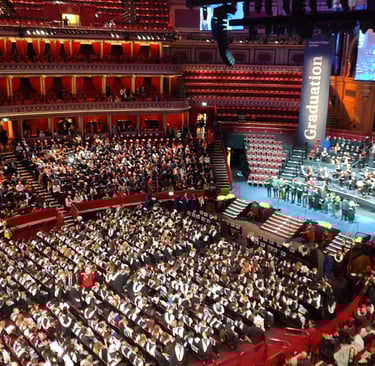
I think I learned a couple of invaluable photography lessons this week. Whether I actually remember to apply them in the future is another matter entirely, though I suspect I will—simply because the context was so memorable.
This week, we attended our daughter's university graduation. It was a long, exhausting day, but absolutely wonderful to be there and celebrate such a massive milestone.
It was also a day that provided two very stark, practical lessons in event photography.
Lesson 1: The Rogue Dial and the Power of the Test Shot
The single biggest takeaway from the day was the absolute necessity of taking test shots before the action actually begins.
Taking a few quick frames in advance gives you immediate confidence. First, you verify that your ambient exposure is roughly in the ballpark. Second, pointing your camera at the scene activates the light meter, allowing you to gauge whether your shutter speed is fast enough to prevent handheld camera shake—especially critical if you are zoomed in on a stage from a distance.
When we arrived, I fired off a quick test shot, only to look down at the preview and discover the image was massively underexposed.
I tried again—still pitch black. For a brief moment, nothing with the camera was making sense, and I felt completely out of sorts. Thankfully, because I had taken the test shot early, I had time to step back, take a breath, and diagnose the issue before my daughter walked across the stage.
The culprit? My camera bag.
I was using a compact sling bag fitted with a padded camera insert. Because the insert was a snug fit, pulling the camera body out of the bag caused the fabric to catch on the mode dial, physically twisting it. It had bumped the camera into a fixed, manual setting that was completely wrong for the lighting conditions of the hall.
The broader lesson here—and the hardest one to consistently remember—is to take a fresh test shot every single time you change locations or lighting environments. It is easy to forget that moving from bright outdoor sunlight into an assembly hall completely changes the light meter's reality.
Lesson 2: Wear Your Glasses (And the Tragic Inflexibility of SD Cards)
The second lesson is specifically aimed at those of us who rely on reading glasses: never try to wing it by muscle memory alone.
While attempting to zoom in on a freshly captured photo on the rear LCD screen to check focus, I skipped putting my glasses on. I misread the buttons, pressed the wrong key, and instinctively hit it twice to confirm.
Just like that, I accidentally deleted the image.
To make matters worse, I assumed I could easily retrieve the lost image later using an SD card recovery tool. I figured the card’s wear-leveling algorithms would leave the raw data untouched elsewhere on the flash memory. Unfortunately, despite the recovery software pulling up deleted photos from weeks and weeks ago, that specific file was completely overwritten instantly and gone forever.
It was an annoying and thoroughly unexpected lesson, but a vital one nonetheless.
Hopefully, I will carry both of these lessons forward into the next big family event:
Fire off a test shot the second you enter a new room.
Put your glasses on before touching the delete key!
Behind the Lens: Quick Event Checklist
Artist's Note: High-stakes indoor events (like graduations, weddings, or theater performances) leave zero margin for error. Before the key moment happens:Check Your Mode Dial: Ensure friction hasn't bumped you out of your intended shooting mode (Aperture Priority, Shutter Priority, or Manual).Verify Minimum Shutter Speed: If shooting with a telephoto lens (e.g., 200mm or 300mm), ensure your shutter speed doesn't drop below 1/250s or 1/500s to keep the graduate crisp as they walk across the stage.Lock Your Cards: If you accidentally delete an important image, stop using that SD card immediately. Swap in a secondary card for the rest of the day to maximize your chances of recovering the deleted data when you get home.