
Manchester’s Hidden Dome: Capturing the Secret Architecture of the Portico Library
LIBRARYNEOCLASSICALMANCHESTER
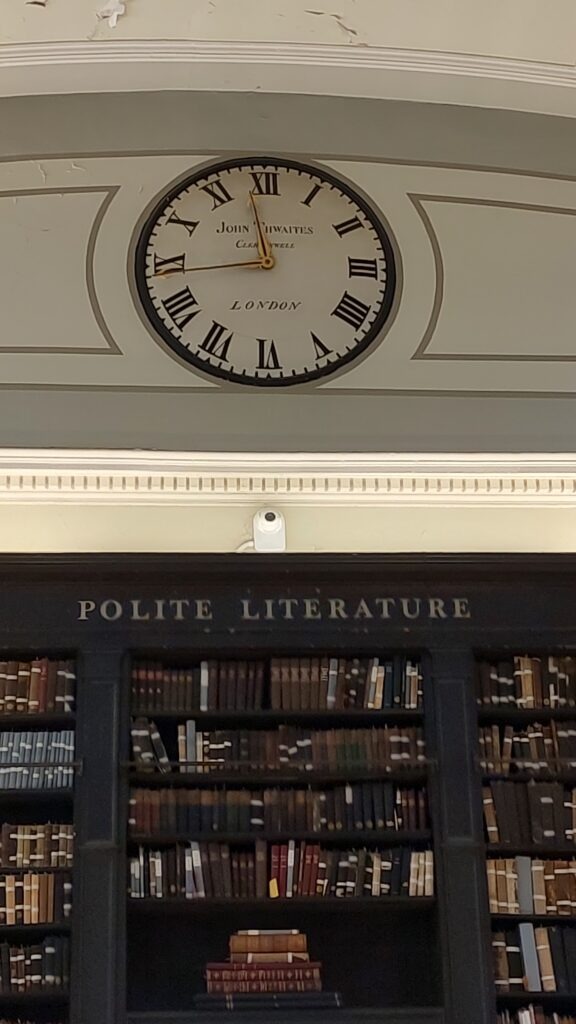
Despite living and working around Greater Manchester for more years than I dare to mention, the historic Portico Library completely eluded me until my twenties. Growing up, I rarely ventured into the city center since Stockport provided everything I needed. But once I began working in Manchester and spending my lunch breaks exploring its streets, I became fascinated by a small, unassuming side door on the corner of Mosley Street.
Stepping through that door takes you into an incredibly beautiful space topped by a magnificent, ornate glass ceiling. Interestingly, a bit of post-trip detective work on Google Maps left me thoroughly confused. Looking at the aerial view of the building, there is no sign of a round, decorative dome with windows anywhere on the roofline. After a bit of digging, the mystery was solved: the original glass dome is actually housed entirely beneath a protective, rectangular outer roof.
The building itself is a spectacular example of Greek Revival architecture. While the ground floor now operates as a pub, the entire neoclassical structure was originally the Portico, housing grand newsrooms and the library above. The modern, quiet side entrance always intrigued me, and it makes sense when you realize the library originally occupied the whole footprint, likely utilizing the grand front doors.
For a long time, I mistakenly assumed the building was designed by Charles Barry, who drew up the magnificent Manchester Art Gallery just a few doors down. In reality, the Portico was designed by Thomas Harrison. Despite being built nearly thirty years before Barry's art gallery, both buildings share a striking, cohesive "Greekesque" design language. Standing on the street, you'd be forgiven for thinking they were penned by the exact same hand—and perhaps Barry looked at Harrison's work and decided it was the perfect aesthetic to fit into the changing Manchester skyline.
Photography Notes
Location: The Portico Library, Charlotte Street/Mosley Street, Manchester, England.
Subject: Neoclassical Architecture / Interior Glass Domes.
Managing Interior Mixed Lighting: Historic libraries often present a nightmare for white balance. You are dealing with cool, natural daylight spilling down through the glass ceiling mixed with warm, artificial gallery lighting illuminating the bookshelves below. To avoid weird color casts, shoot in RAW so you can selectively balance the color temperature in post-processing, or lean into the contrast to let the warm woods frame the cool daylight.
The Symmetry Challenge: Looking straight up at a symmetrical dome requires precision. If your camera sensor is even slightly tilted off-axis, the geometric lines of the glass panes and support beams will warp, ruining the architectural illusion. Use your camera’s built-in electronic level (the virtual horizon) and try to align yourself perfectly dead-center under the apex of the dome.