
Photography at Kallithea Springs: Rhodes’ Architectural Resurrection
RHODESBUILDINGGREECE
We recently traveled to Rhodes, and the weather was quintessential Greek island perfection—cloudless blue skies, though thankfully not hot enough to melt a Mancunian. I have a notoriously low melting point; any hotter and you’d find me permanently hugging the air-con in the apartment.
While the island is famous for its Doric columns, I found the Acropolis of Rhodes fascinating for a different reason: it’s a living part of the city. Unlike many ancient sites, it’s a free public park where you might see kids kicking a football right next to an ancient temple plinth. Without the ropes and ticket booths, the history feels more "real" and integrated into daily life.
However, the highlight for me was Kallithea Springs, just outside Rhodes Town. Built in 1929, the site fell into decay during the war and remained a ruin until its stunning restoration and reopening in 2007. It is a masterclass in the resurrection of historic locations.
What makes Kallithea unique is the blend of Italian and Moorish architecture. My inner pedant notes that the Moors never ventured this far East, but the influence here is undeniable and beautiful. From a photography standpoint, Moorish design is a dream for its symmetry.
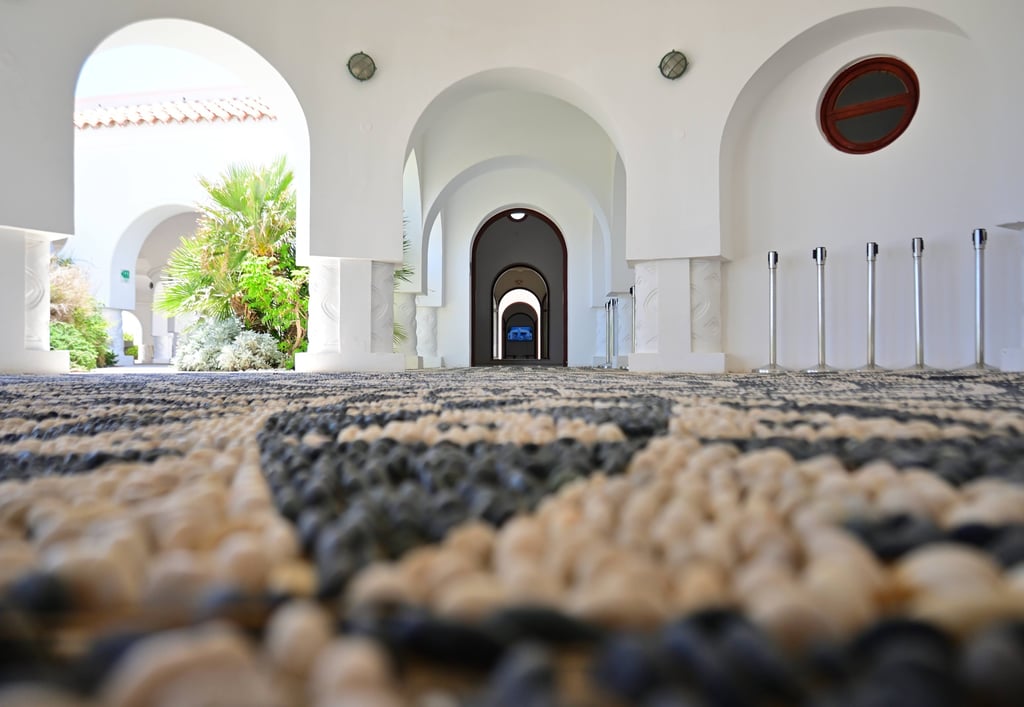
I wanted to emphasize this geometric precision, so I framed the shot through a series of receding doorways. By placing the camera directly on the ground, I also captured the intricate Hokhlaki (pebble stone) flooring that is so characteristic of Rhodes, giving the foreground an abstract, textured appeal against the clean white walls of the rotunda.
Have a look at out Acrpolis Post for more Rhosean photgraphy, or even have a look at out Athens post for more about Greece.
Photography Notes:
Location: Kallithea Springs (Terme di Kallithea), Rhodes, Greece.
Subject: Neo-Moorish Rotunda and Pebble Mosaic Flooring.
Composition: Low-angle "tunnel" perspective to highlight symmetry and local stone textures.