
Bottle Kilns and Oatcakes: A Day at Gladstone Pottery Museum
POTTERYSTAFFORD
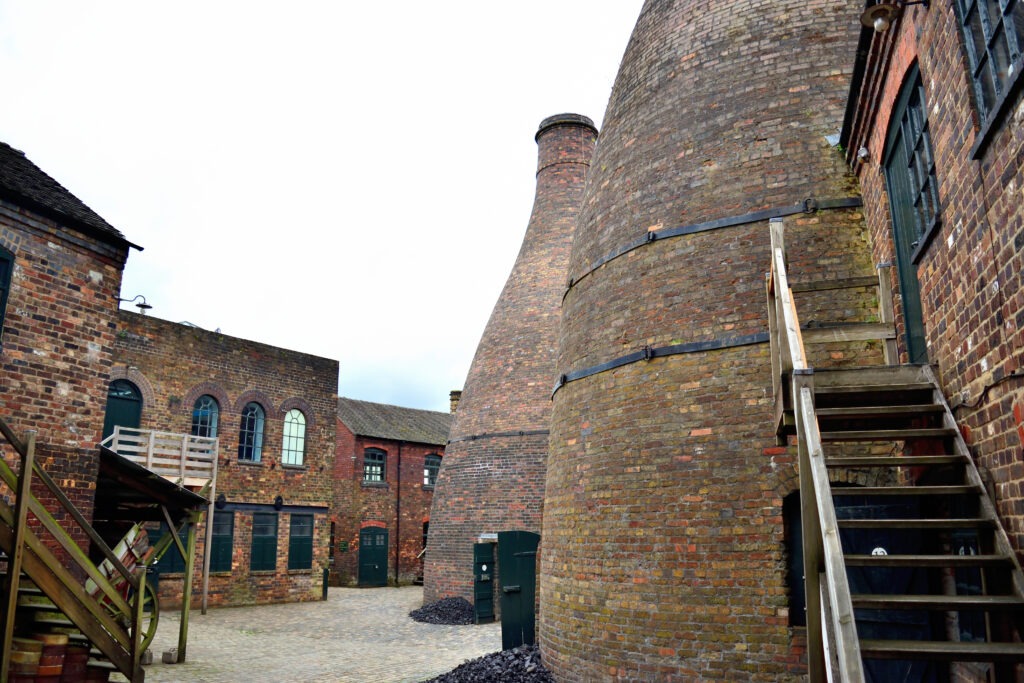
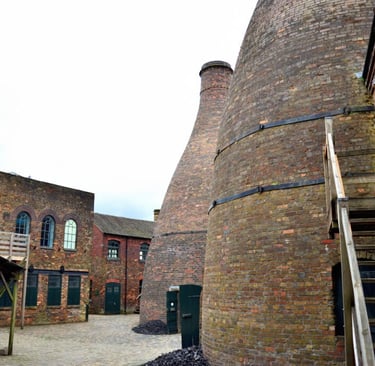
It was brilliant to finally break free from work obligations and weekend laziness to get out for a proper day trip. Having a rest day is important, of course, but nothing beats the feeling of exploring somewhere new—and this weekend took us to Gladstone Pottery Museum in Longton, Stoke-on-Trent.
Gladstone boasts the largest remaining concentration of authentic bottle kilns in Staffordshire, featuring five or six of these massive brick structures, four of which you can actually walk around and inspect up close.
While they might all share a similar architectural design on the outside, stepping directly inside the base of a kiln is a genuinely impressive experience. Looking up from the interior reveals the incredible brickwork engineering required to drive high-temperature pottery firing during the height of the Industrial Revolution.
For fans of The Great British Pottery Throw Down, stepping into the courtyard will feel instantly familiar—this preserved Victorian factory is the exact location where the show is filmed!
A visit to the Potteries wouldn't be complete without sampling the regional fuel: the traditional Staffordshire oatcake.
For the uninitiated, these aren't the dry oat crackers you get in Scotland; they are savory, pancake-like flatbreads cooked on a griddle, folded, and stuffed with melted cheese and meats.
This was my second time trying one—the first being during a trip to Middleport Pottery. I must admit, this experience was vastly superior. Since bacon wasn't on the menu, I opted for ham and cheese. Nobody visits an industrial pottery museum purely for the catering, but enjoying a hot, fresh oatcake in a historic courtyard is hard to beat!
Gladstone feels like a broader, larger museum experience compared to Middleport Pottery. It offers a deep dive into the daily lives, harsh working conditions, and artistry of the men, women, and children who built Stoke-on-Trent’s global reputation as "The Potteries."
Both sites are well worth visiting, though Gladstone gives you a much better sense of the scale of industrial firing thanks to those towering kilns.
Naturally, no visit ends without a trip through the gift shop, filled with locally crafted mugs, bowls, and dinnerware. You ask yourself: How many pottery mugs does one household actually need?
Apparently, according to my wife, the answer is always "just one more."
Photography Notes
Location: Gladstone Pottery Museum, Uttoxeter Road, Longton, Stoke-on-Trent.
Subject: Industrial Heritage Architecture, Brickwork & Interior Geometry.
Photographing Inside Brick Kilns: Looking up from the dark floor of a bottle kiln toward the open sky vent creates an extreme dynamic range challenge.
Expose for the Sky Vent: Don't let the bright patch of sky at the top blow out to pure white. Dial in negative exposure compensation to preserve sky detail, then recover the shadow detail of the curved brick walls using raw editing tools.
Use Vertical Symmetry: Position your camera directly in the center of the kiln floor looking straight up. Aligning the circular brick opening in the center of your frame creates a striking, abstract geometric photograph.