
Homebuilt Choppers & Flying Suitcases: Canadian Museum of Flight
MUSEUMAIRCRAFTHAMPDENHANDLEY PAGE
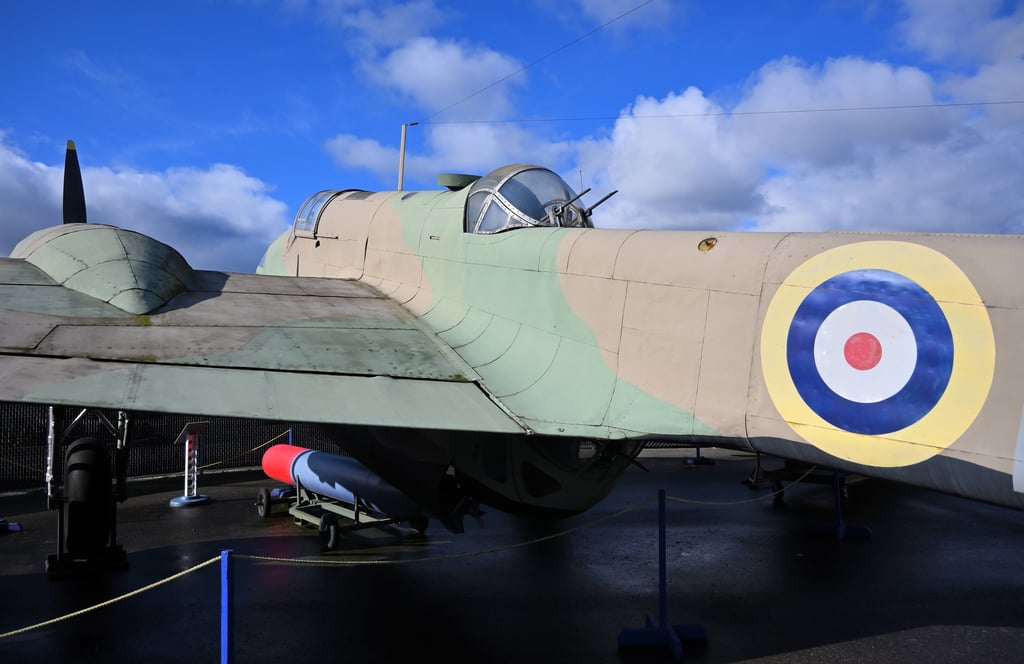
Just down the road from where we were staying in British Columbia sits the Canadian Museum of Flight in Langley.
It’s a charmingly modest, volunteer-run affair that feels remarkably similar to the small aviation museums we have scattered across the UK. Due to modest budgets and limited hangar space, exhibits aren't laid out in strict chronological order—instead, historical aircraft are carefully wedged together based on how they physically fit into the room!
The museum also boasts an impressive collection of detailed model aircraft. While I admired them, I resisted the urge to visit the gift shop—there was zero chance a delicate scale model would survive my return flight and the gentle hands of airport baggage handlers!
One of the stand-out historical exhibits is the restored remains of a Handley Page Hampden—a WWII twin-engine medium bomber I had never actually encountered in person before.
Standing next to it, the aircraft's incredibly narrow fuselage makes an immediate impression (earning it the nickname "The Flying Suitcase"). It was quickly superseded by iconic four-engine heavy bombers like the Handley Page Halifax and the Avro Lancaster, partly because its compact airframe harbored some serious aerodynamic quirks.
The example on display ended up "in the drink" off the Canadian coast due to these exact handling traits. The Hampden was notoriously prone to extreme yaw (or sideslipping). If a pilot got the narrow airframe turned too far sideways, the fuselage itself could mask the airflow over the rudder, stalling the wing.
In this aircraft's case, getting slightly out of shape low over the water resulted in a crash landing. Fortunately, all four crew members were spotted and rescued with only minor injuries.
Beyond the WWII bomber history, the museum is packed with weird and wonderful general aviation creations.
My personal favorite was their de Havilland Vampire—mainly because I had built a scale model of one years ago—and a completely homebuilt helicopter powered by an inline-4 Honda Civic engine! It’s the ultimate testament to grassroots aviation engineering.
Photography Notes
Location: Canadian Museum of Flight, Langley Regional Airport, British Columbia, Canada.
Subject: Historic Aircraft Restorations & Indoor Industrial Lighting.
Shooting Tight Hangar Spaces:
Embrace Ultra-Wide Angles ($14\text{mm} - 20\text{mm}$): When aircraft are parked closely together indoors, backing up isn't always an option. Use an ultra-wide prime or zoom lens to capture full nose-to-tail profiles without clipping wingtips against building support beams.
Manage Overhead Hangar Glare: Metal fuselages reflect harsh overhead indoor lighting. Angle your shots slightly off-axis from the light sources to prevent large white flare spots across vintage aluminum paneling.