
The Slow Announcement of Merlins: A Visit to the Avro Heritage Museum
AVRO HERITAGE MUSEUMAVROLANCASTER BOMBER
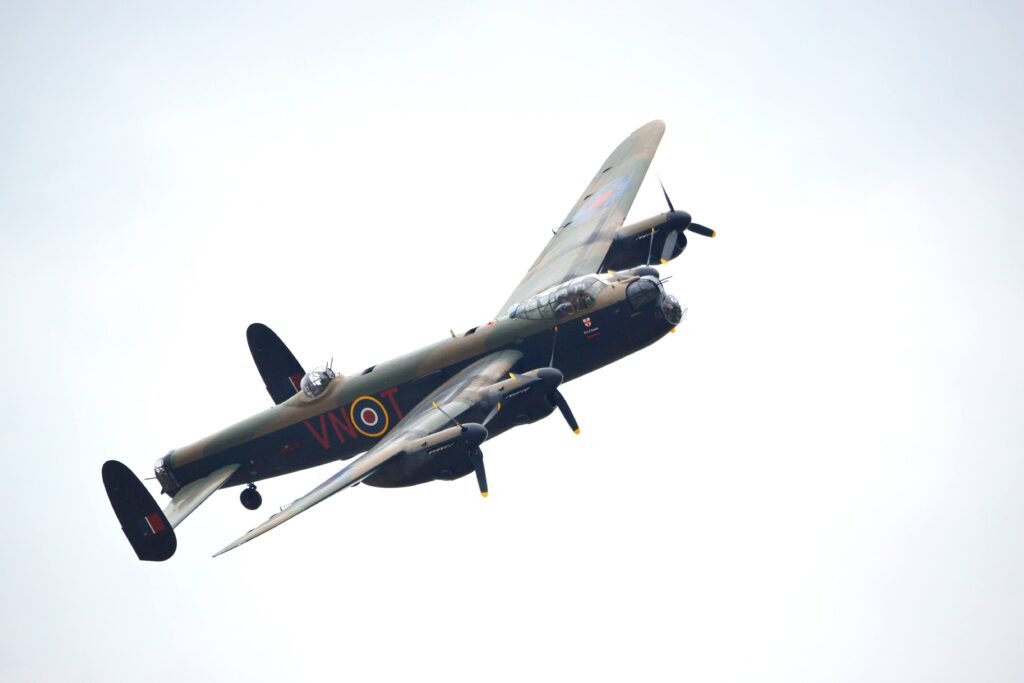
It’s been another incredibly busy few weeks, leaving me with zero time to get out with the camera, let alone upload anything new. A mountain of decorating and DIY has taken over—none of it particularly fun, but all of it necessary. To break the drought, I’m digging back into a trip from September when we visited the Avro Heritage Museum. The museum stands on what remains of the historic British Aerospace factory airfield at Woodford—a place where my dad used to work, and the exact reason I became such a massive aircraft nut.
For those unfamiliar with British aviation history, British Aerospace (BAe) was formed through a massive wave of post-WWII mergers. Interestingly, the heritage site at Woodford revived the legendary Avro name, which originally began at the turn of the 20th century under A.V. Roe. Avro produced the iconic Type 1, and you can actually see a brilliant replica of it down at the Brooklands Museum—the historic home of Vickers aviation. Brooklands is an absolute paradise for aircraft and car enthusiasts; its surviving concrete banking is legendary. Like Avro, Vickers—along with other historic pre-war giants like Bristol and English Electric—eventually found themselves folded into the BAe corporate family tree.
Of course, the star of the Avro production line was the Lancaster bomber (the subject of this week's photograph), forever immortalized by the Dambusters raids—which, in another twist of local history, were tested nearby at Derwent Reservoir. A fascinating piece of design lore is that the Lancaster was penned by Roy Chadwick, the very same genius who later designed the Avro Vulcan. I understand that the cockpit dashboard layouts were intentionally kept remarkably similar between the two aircraft, despite the Lancaster being a piston-prop and the Vulcan a nuclear jet. It ensured that pilots stepping up to the delta-wing bomber instantly felt at home. That said, having stood inside a Vulcan cockpit myself, I can safely say they were not engineered for tall people. Getting to fly a Vulcan simulator, however, remains an absolute thrill.
I had been trying to capture a clean shot of a Lancaster for years, and then, by some stroke of absolute luck last year, I crossed paths with one on three separate occasions. I’m fairly certain I managed to photograph both of the world's remaining airworthy Lancasters, which feels like a major achievement.
There is nothing on Earth quite like the sound of those planes. During our second encounter—a completely unplanned surprise while visiting Llandudno—we were sitting listening to a brass band when a deep, distinct drone began echoing from across the sea. It didn't sound like any modern aircraft. I immediately started fishing frantically through my camera bag to swap to the correct lens, but I didn't need to panic. The roar of four synchronized Rolls-Royce Merlin engines gives you plenty of warning. It doesn't just suddenly arrive; it feels like a grand, slow announcement echoing across the horizon.
Photography Notes
Location: Avro Heritage Museum, Woodford, Cheshire / Llandudno Coast, Wales.
Subject: Historic Aviation / The Avro Lancaster Bomber.
Capturing Propeller Movement: When photographing prop-driven aircraft like the Lancaster, never use an excessively fast shutter speed (like $1/2000\text{ s}$). A hyper-fast shutter will completely freeze the propeller blades, making the aircraft look like a plastic model kit hanging unnaturally in the sky. Instead, drop your shutter down to around $1/250\text{ s}$ or $1/320\text{ s}$ to introduce a clean, dynamic "prop blur" that conveys a true sense of motion and power.
Chasing Moving Targets: Aviation photography requires anticipation. When shooting a rare flypast, listen for the engines early, select your panning zone before the aircraft reaches you, and use continuous autofocus (AI Servo/AF-C) with a high-speed burst mode to ensure at least one frame captures the perfect cockpit alignment.