
Mystery Beacons, Forgotten Docks & Wooden Sentinels: Flint Foreshore
BEACONFLINTSKY
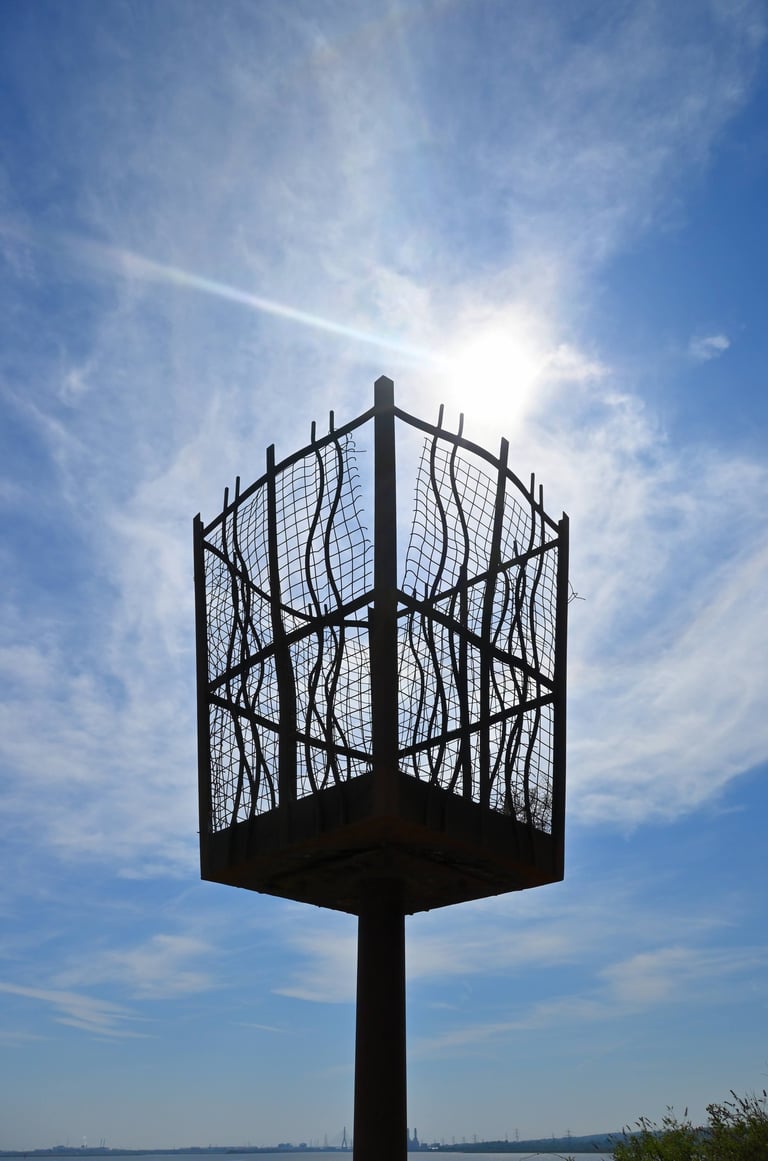
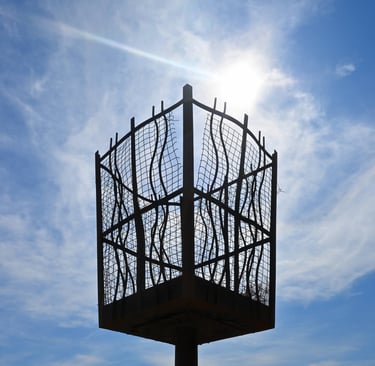
It was a fascinating day exploring the coastline around Flint Castle in North Wales.
Just near the castle grounds, you run into an intriguing metal beacon structure sitting out on the salt marsh. Searching for information about it online can be a bit of a maze—you'll find plenty of articles on the RNLI station's beacon, or the famous landmark beacon over at Bagillt further up the coast, but this particular spot simply gets pinned on Google Maps under the general banner of "Flint Foreshore." It leaves you wondering about its specific name and history, but it makes for a striking landmark against the backdrop of the Dee Estuary regardless!
Walking along the waterfront near Flint Castle, it’s hard to imagine that this peaceful shoreline was once a bustling industrial hub.
As we walked down what initially looked like a natural tidal inlet, the path abruptly ended at an old information board. It turns out this inlet was actually Flint Dock, a heavily used maritime port dedicated to exporting coal mined from local pits.
Once the nearby Flint Colliery closed, the dock lost its primary purpose and fell out of maintenance. Over the decades, nature reclaimed the stone quays, leaving it looking more like a quiet tidal inlet that goes nowhere. The old colliery itself was situated about a mile inland—right where Flint Cemetery sits today.
Along the Wales Coast Path near the water, you’ll also come across a series of evocative wooden sculptures carved into public "Story Benches" by local artists.
One depicts a Royal Welch Fusiliers soldier from WWI holding a letter from home, tucked into his wooden hands. It’s surprising to see the physical letter intact given the wear and tear of coastal weather (and the occasional bout of vandalism), but it remains a poignant sight.
Further down near the lifeboat station, another bench features a fisherman's wife tending to her catch, alongside an RNLI helmswoman scanning the horizon—fitting tributes to the town's rich maritime and military history.
No visit here is complete without stepping inside Flint Castle itself—the historic fortress built by Edward I in 1277 with its famous isolated Great Tower (or Donjon).
One final observation: the climb up the spiral steps inside the tower feels impossibly exhausting for such a modest flight of stairs! Either I was having a particularly low-energy off day, or the grounds beneath Flint Castle are sitting directly over a localized geological anomaly where gravity pulls just a little bit harder!
Photography Notes
Location: Flint Castle & Foreshore, Castle Road, Flint, Flintshire, Wales.
Subject: Maritime Ruins, Wooden Statues & Estuary Panoramas.
Framing Coastal Sculptures & Ruins:
Use Environmental Framing: Position the wooden story benches in the lower third of your frame while keeping the distinct silhouette of the castle keep or the wide Dee Estuary in the background.
Expose for Low-Contrast Estuary Light: The Dee Estuary can produce flat grey skies. Underexpose slightly to preserve cloud detail, then lift shadow tones in post-processing to bring out the carved texture of the wooden figures.