
Props, Pistons, and "Box, Box, Box!": A Petrolhead’s Outing to the Avro Heritage Museum
AIRCRAFTAVROENGINE
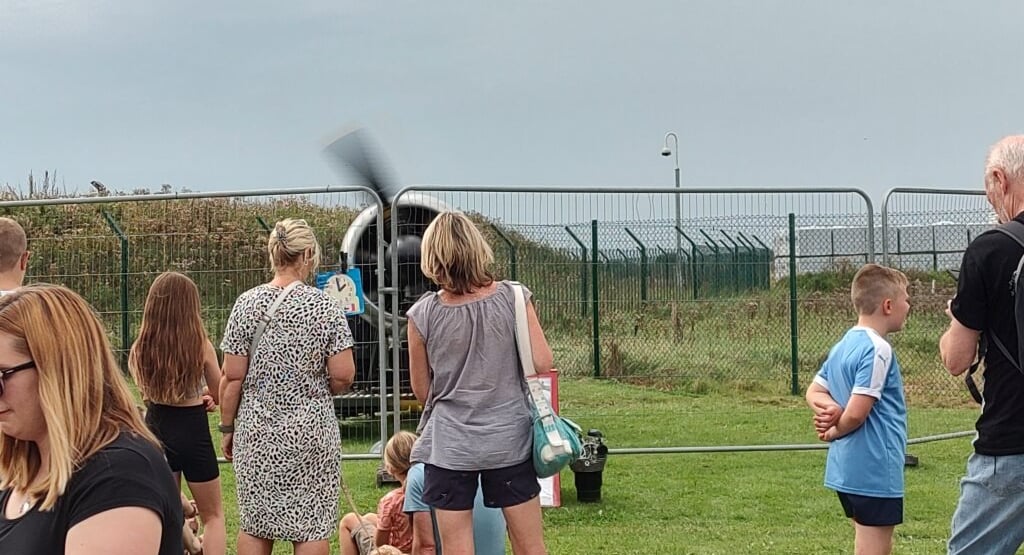
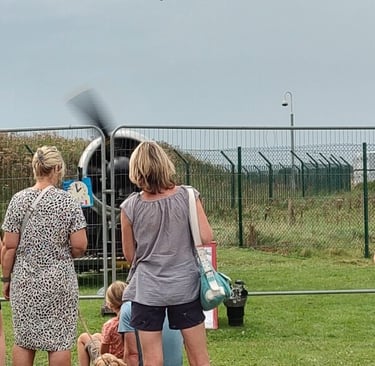
We recently spent a brilliant afternoon at the Avro Heritage Museum on the historic Woodford Aerodrome site in Cheshire. The grounds were packed out, largely because the event featured a spectacular Lancaster bomber flyover. In a fascinating twist of luck, after going decades without seeing an Avro Lancaster in flight, this marked my third time spotting one this year alone.
While the skyward display was breathtaking, one of the main ground attractions was beautifully eccentric, yet entirely understandable given the venue: an live aircraft engine power-up demonstration.
The setup is brilliantly simple. It is essentially a vintage aircraft engine, complete with an enormous propeller, mounted securely to a heavy ground stand. The operator then fires it up, running it right up to "full chat" while pointing the immense prop-wash directly toward the gathered crowd. On paper, intentionally standing in front of a roaring, stationary airplane engine sounds completely bizarre. Yet in this setting, it makes absolute, thrilling sense. If you possess even a passing appreciation for mechanical engineering, it is an utterly mesmerizing, chest-vibrating display.
The thunderous noise reminded me of a realization I’ve come to about myself over the last few years: I am a massive, unapologetic petrolhead. I have become firmly convinced that it doesn’t matter what the vehicle or the context is—if there is an internal combustion engine or a high-powered motor involved, I will happily stand and watch it. I’ve never been a massive fan of motorcycles in my daily life, yet I will willingly tune into Moto GP over almost any other broadcast on television.
In fact, I would go so far as to say that if Strictly Come Dancing were performed entirely in sports cars, on motorbikes, or perhaps most entertainingly, on high-speed electric unicycles, I would become an absolute fanatic. I’d be cheering on Dianne Buswell or Katya Jones every single Saturday night.
Admittedly, I’m not entirely sure the traditional Strictly fanbase would approve of the extra jeopardy. The introduction of sudden mid-routine punctures would completely change the dynamic of the ballroom, requiring high-stakes, frantic pit stops. I can picture it vividly now: a dancer gracefully moving through a contemporary routine, only for the professional partner to scream "Box, Box, Box!" into their headset at a critical point in the performance. Until the BBC adopts motor racing regulations for the ballroom, heritage aviation museums will just have to do.
Photography Notes
Location: Avro Heritage Museum, Woodford, Cheshire, England.Subject: High-Speed Propeller Shutter Mechanics / Vintage Aviation.
The Propeller Blur Challenge: When photographing a live engine demonstration or an active flyover, the biggest mistake you can make is shooting with an excessively fast shutter speed ($1/4000\text{s}$). While a fast shutter guarantees a sharp image, it completely freezes the propeller blades in mid-air. This makes a roaring, full-throttle aircraft look like it's frozen solid or falling out of the sky. To capture the raw power of a live engine, drop your camera into Shutter Priority mode and shoot between 1/125 and 1/250. This introduces a beautiful, dynamic motion blur to the spinning prop while keeping the body of the engine pin-sharp.
Managing Crowd Lines at Busy Events: At highly crowded heritage events, getting a clean composition without a hundred heads in the lower third of your frame is an art form. Instead of shooting at eye level, try raising your camera high above your head using a flip-out LCD screen to shoot downward at the machinery, or lean entirely into the crowd presence by using a wide-angle lens to include the silhouetted shapes of the spectators, turning the audience into a deliberate framing device for the massive machine.