
Spinning Plates and Sapped Energy: Cycling the C2C from Whitehaven to Tynemouth
CYCLINGTYNEMOUTHWHITEHAVEN
It all started with a YouTube video a few months ago. It looked like absolute fun: cycling the legendary C2C (Sea to Sea) route across the North of England and camping along the way. I happened to mention to my daughter that it looked interesting. That casual comment rapidly snowballed into a plan, and before I knew it, a plan became an actual, full-blown cross-country ride.
Day 1: Whitehaven to Hutton-in-the-Forest
Filled with a healthy dose of apprehension, we set out from Whitehaven on Day 1, staring down our longest mileage day of the trip. Our destination was Hutton-in-the-Forest. Naturally, the first question anyone asks is, "Hutton-in-the-where?" Exactly. While the estate is locally famous for its historic Hall and Gardens, for us, its primary virtue was housing a tearoom.
Despite the fact that we rolled up a mere 20 minutes before closing time, the staff welcomed us with genuine smiles, hot drinks, and a phenomenal piece of chocolate brownie. They were incredibly cheery and genuinely interested in our cross-country journey. However, the optimism dampened slightly when we mentioned our next destination was Alston—our hostess pulled no punches in warning us just how horrible the upcoming climb into the town would be. To add a tiny fly to the ointment, we discovered they had closed our exact road for resurfacing about 20 minutes outside of Hutton, forcing an early detour.
Day 2: The Brutal Ascent to Alston
Day 2 went smoothly enough until we encountered a massive fallen tree completely blocking the road. Another detour was required, which we managed to navigate safely until we hit the aforementioned climb to Alston.
Look, we may be mental, but we are not completely stupid. Staring up at that relentless incline, we threw in the towel and walked it—all three to four miles of it. It was a strange, grueling day. I hadn't even realized just how cold and depleted I was until we finally arrived at Walter’s Café Bar in Alston. The sudden blast of heat as we pushed the door open instantly alerted my body to the fact that I was freezing, and the arrival of the food completely awakened my taste buds. I’m not saying a traditional Full English breakfast isn't always great, but profound hunger makes it taste like a Michelin-starred luxury.
Day 3: Gravel Grinds and Horizontal Chimneys
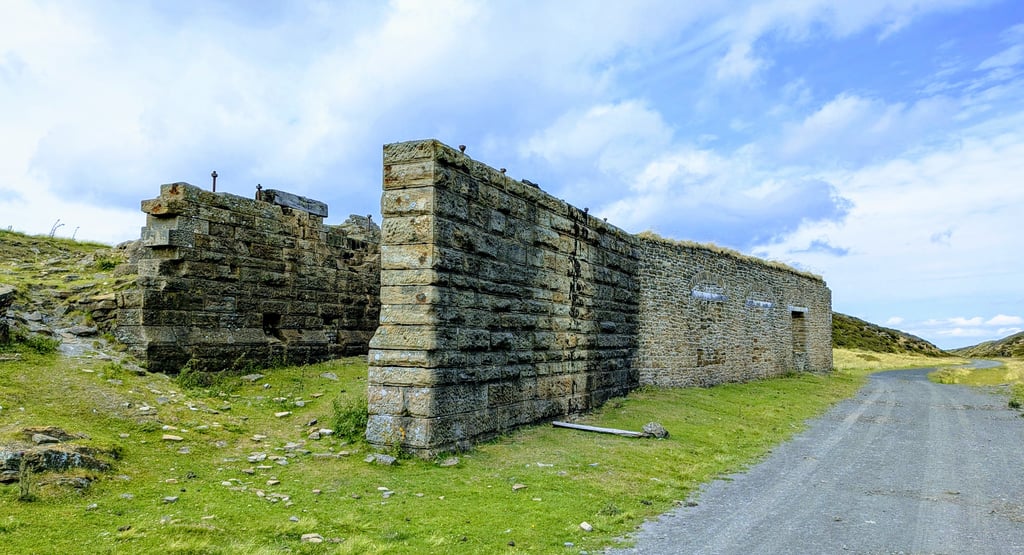
Day 3 was mostly uneventful, save for another staggering climb where the cover photo for this post was taken: the Bolts Law Standing Engine summit. The incline here was exceptionally steep, but the real energy-sapper was the surface—coarse, large gravel that shifted under our tires and constantly sapped our momentum. Most of the riding up to this point had been on paved tarmac or light, loose surfaces, but this thick gravel was exhausting. The track itself follows an old historic railway line which the stationary steam engine originally served, hauling and lowering freight trains that weren't famed for their hill-climbing abilities.
Our ultimate goal for the day was Consett. Descending the other side of the pass brought us into Rookhope, where we paused at the Rookhope Kitchen for a life-saving drink, hot toasties, and a welcome seat. The valley is home to the historic Rookhope Chimney (or what remains of it). Initially, I mistook the ruins for an old elevated roadway because it is a massive horizontal flue suspended over the landscape across stone arches. Sadly, only one of the original six arches survives today.
Day 4: The Final Push to Tynemouth
The final leg was mercifully easier, trending mainly downhill toward the coast at Tynemouth. True to form for our luck, however, two major bridges along the official C2C cycle path were completely closed for maintenance.
We were forced to turn around and make a series of random turns, praying that the bike computer's GPS would intelligently route us around the blockages instead of trying to circle us right back into the closed sections (which it tried to do on a few frustrating occasions).
Eventually, the iconic industrial silhouettes of the Tyne Bridge and The Glasshouse (Sage) center appeared on the horizon—a deeply welcome sight. We pushed through the industrial corridors of the riverbanks toward the coast. Reaching the Tynemouth Marina, we foolishly celebrated thinking the hard work was over, only for the GPS to ruthlessly instruct us to carry on a bit further to the official finish line.
Photography & Packing Notes: The Art of Spinning Plates
The "Just in Case" Sieve: All in all, it was an incredibly enjoyable, deeply rewarding trip, even if there were distinct moments where it felt immensely difficult. Personally, I am not a massive fan of the unsettling feeling of not knowing exactly where everything is at any given second.
The Luggage Breakdown: I ended up traveling with a complex three-bag setup. Bag one was a spare kit bag packed with cycling layers for every conceivable British weather shift, alongside vital bike spares. Bag two was a dedicated clothes bag stuffed with chargers, tech cables, toiletries, and everyday clothes. Bag three was my active riding pack, worn on my back, containing immediate tools and trail spares. On top of that sat a loose shopping bag holding my helmet and gloves during stops.
The Logistics Chore: Moving from place to place each morning felt like a constant exercise in spinning plates. Making sure devices were charging, bags were packed in a specific order, nothing was left behind under a hotel bed, and everything—including my separate reading and long-distance glasses—was in its correct pocket became a grueling daily ritual. I swore to myself that next time (if there is a next time), I will simply pack less stuff. But let's be honest, that is never going to happen. My life's motto will always remain: "Let's take it just in case."